The Authority on Rainwater Harvesting
Free water lands on your home every time it rains. We show you exactly how to legally collect it, store it, and put it to work, backed by state statutes and tested equipment, not guesswork.
What Is Rainwater Harvesting?
Rainwater harvesting is the practice of catching and storing the rain that already lands on your roof, instead of letting it run into a storm drain. It’s legal almost everywhere, inexpensive to start, and one of the few home upgrades that pays you back every time it rains.
We built this site to be the single most reliable source on how to do it right, state law, equipment, and filtration, all in one place, every claim cited.
Read the beginner’s guide
Why It Matters
More than half the continental US is in drought. Every gallon you catch is a gallon you don’t pull from the tap, or lose to the next watering restriction.
Over half the continental US is in drought as of mid-2026, near the worst footprint since 2012.
Roughly 30% of household water goes outdoors, up to 60% in dry Western climates.
The EPA estimates a single rain barrel saves about 1,300 gallons of tap water each summer.
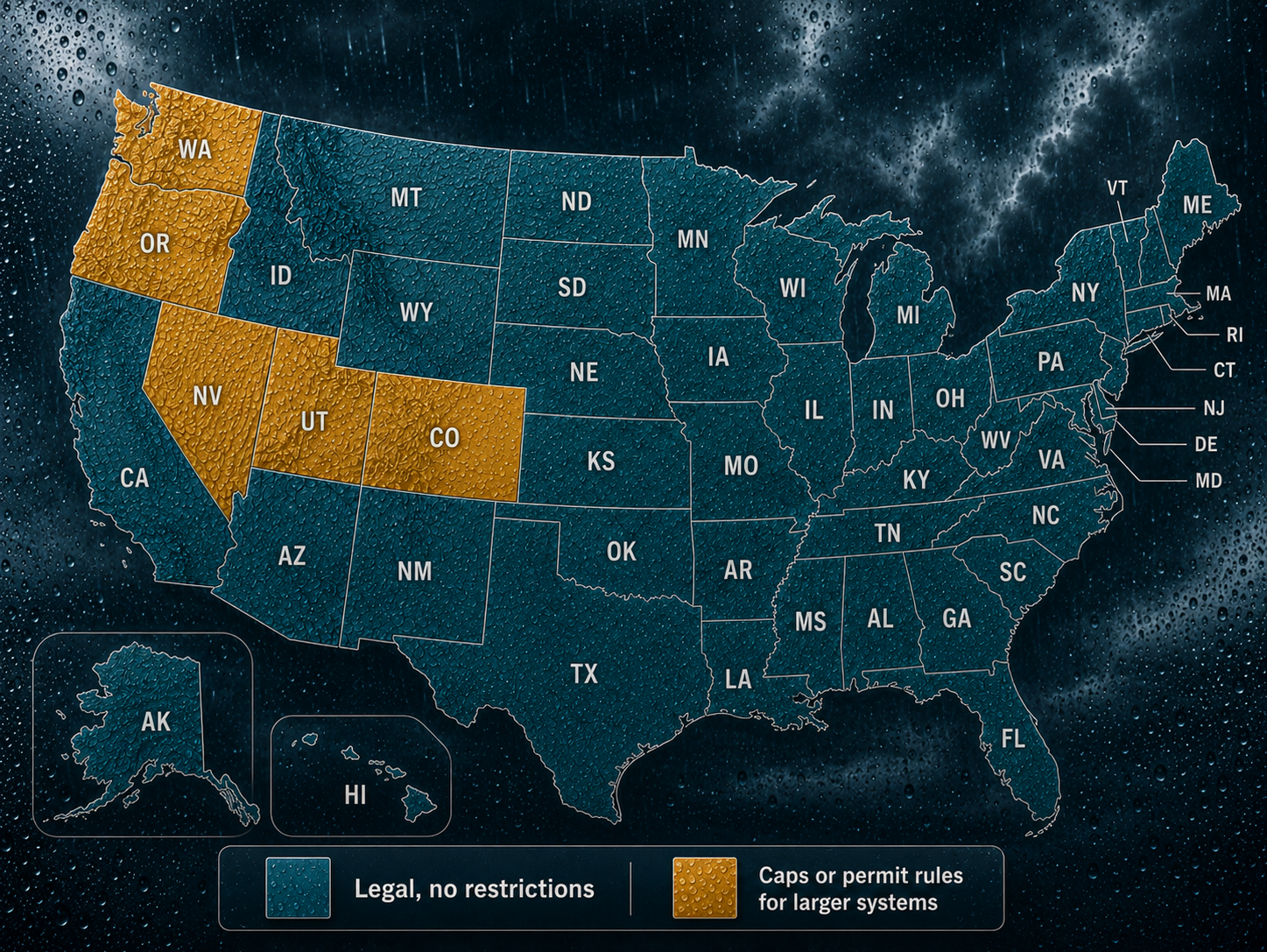
Collection is legal in all 50 states, with only a handful of volume caps worth knowing about.
Know Before You Collect
Colorado, Utah, Nevada, Oregon, and Washington apply caps or permit rules for larger systems. Every other state places no restrictions on a standard rain barrel, and several actively encourage collection with tax credits and rebates.
Every state entry cites the actual statute or agency it came from, Colorado HB 16-1005, Texas SB 769, and so on.
Run Your Numbers
One inch of rain on 1,000 square feet of roof is about 600 gallons. Slide your roof size and local rainfall into our calculator and see the real number.
collected per inch of rain on every 1,000 sq ft of roof, at 100% efficiency.
average annual rainfall for a US home, over 20,000 gallons a year on a typical roof.
barrels is all most homes need to cover a vegetable garden through summer.
How It Works
The same basic system whether you’re keeping tomatoes alive or filtering all the way down to drinking water.
Rain lands across your entire roof surface.
Gutters funnel it to a single downspout.
A diverter routes water into a sealed barrel.
Optional staged filtering for cleaner water.
Use it outdoors, or filter further for the tap.
Recommended Systems
We carry the Good Ideas Rain Wizard and Impressions lines because they passed our testing criteria, not because anyone paid for placement.

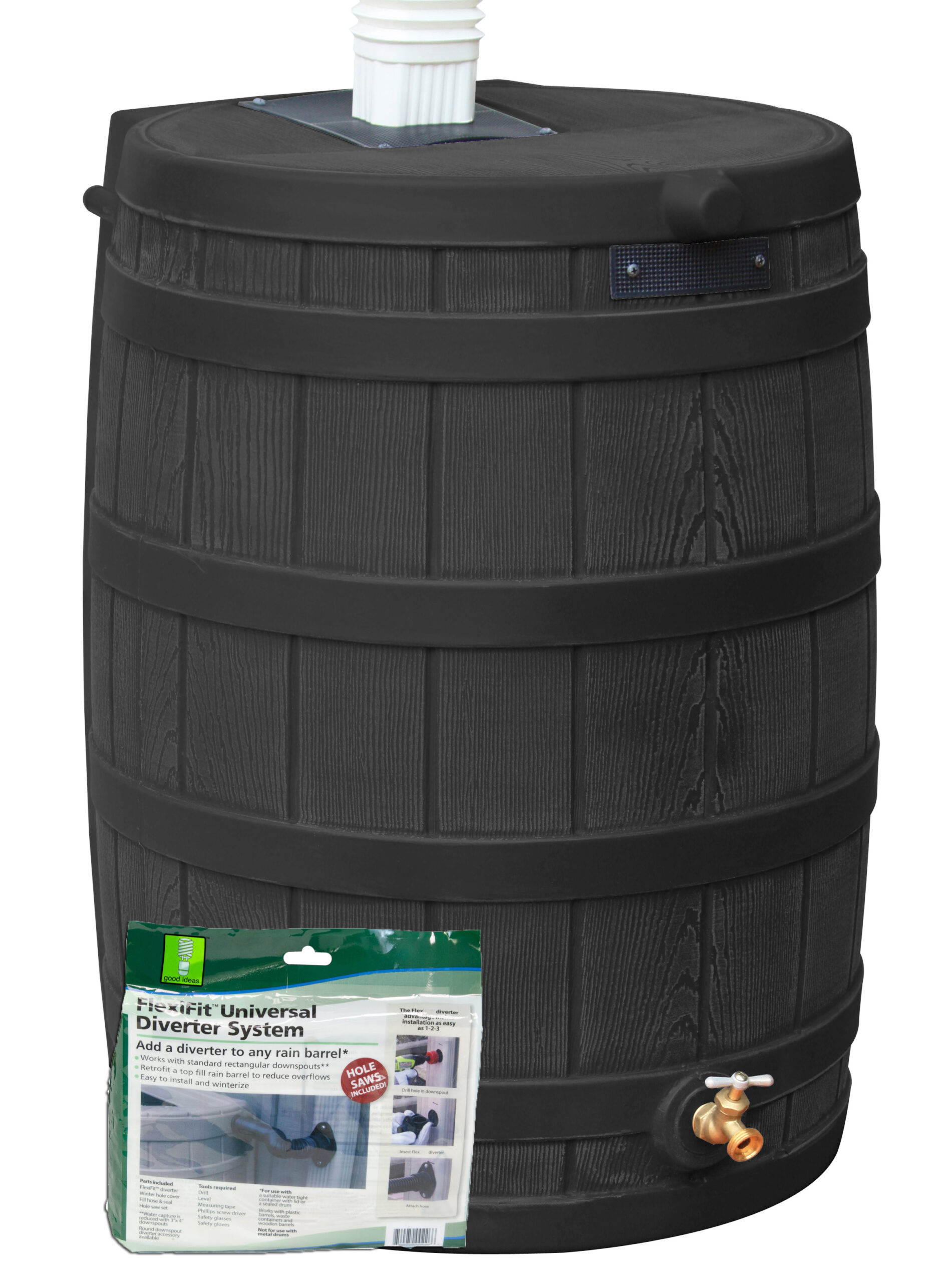
The 50-gallon barrel bundled with a diverter, so a first-time buyer gets a complete downspout setup in one order.

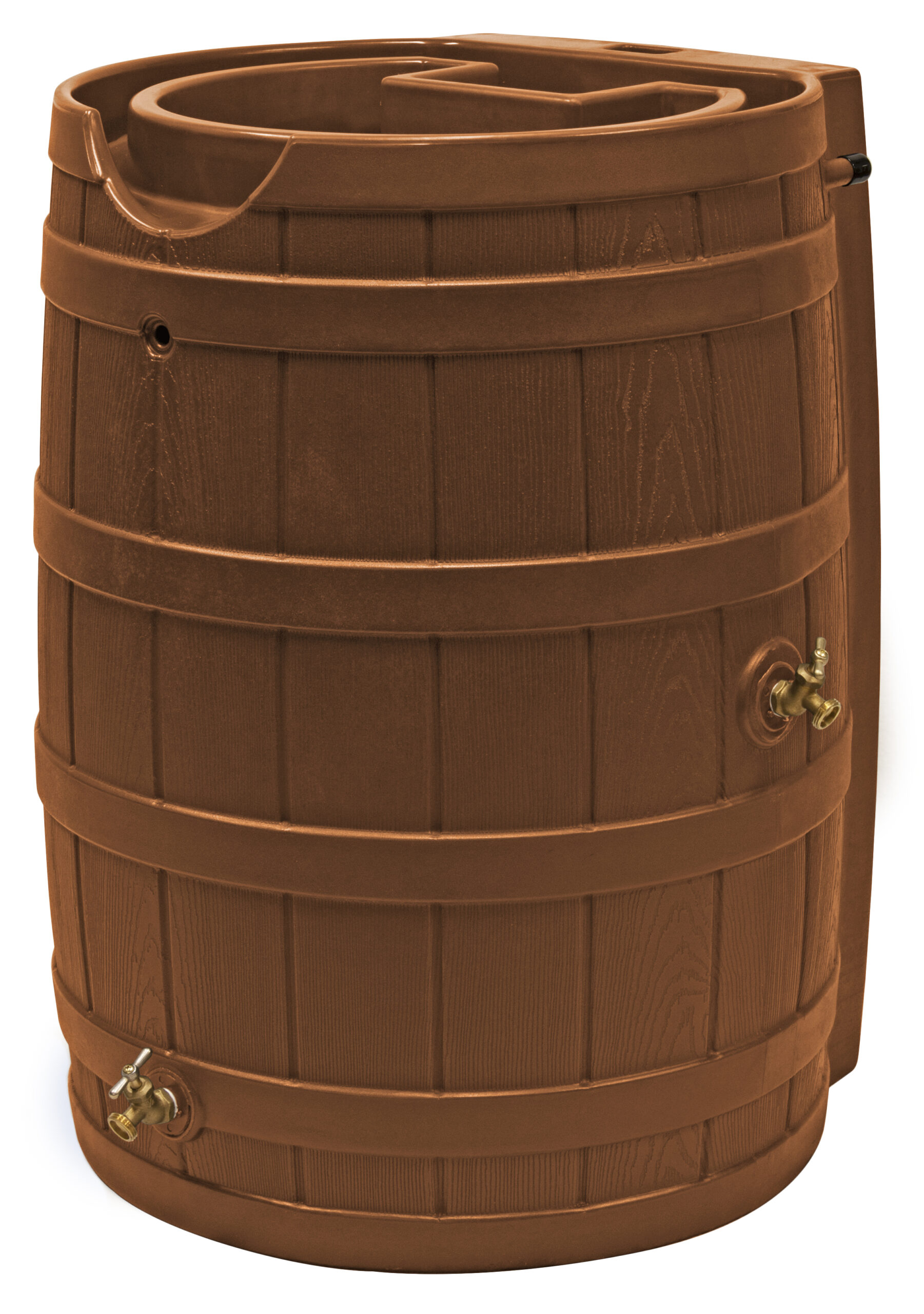
A larger-capacity barrel for bigger roofs, or households that want to stretch stored water further between refills.

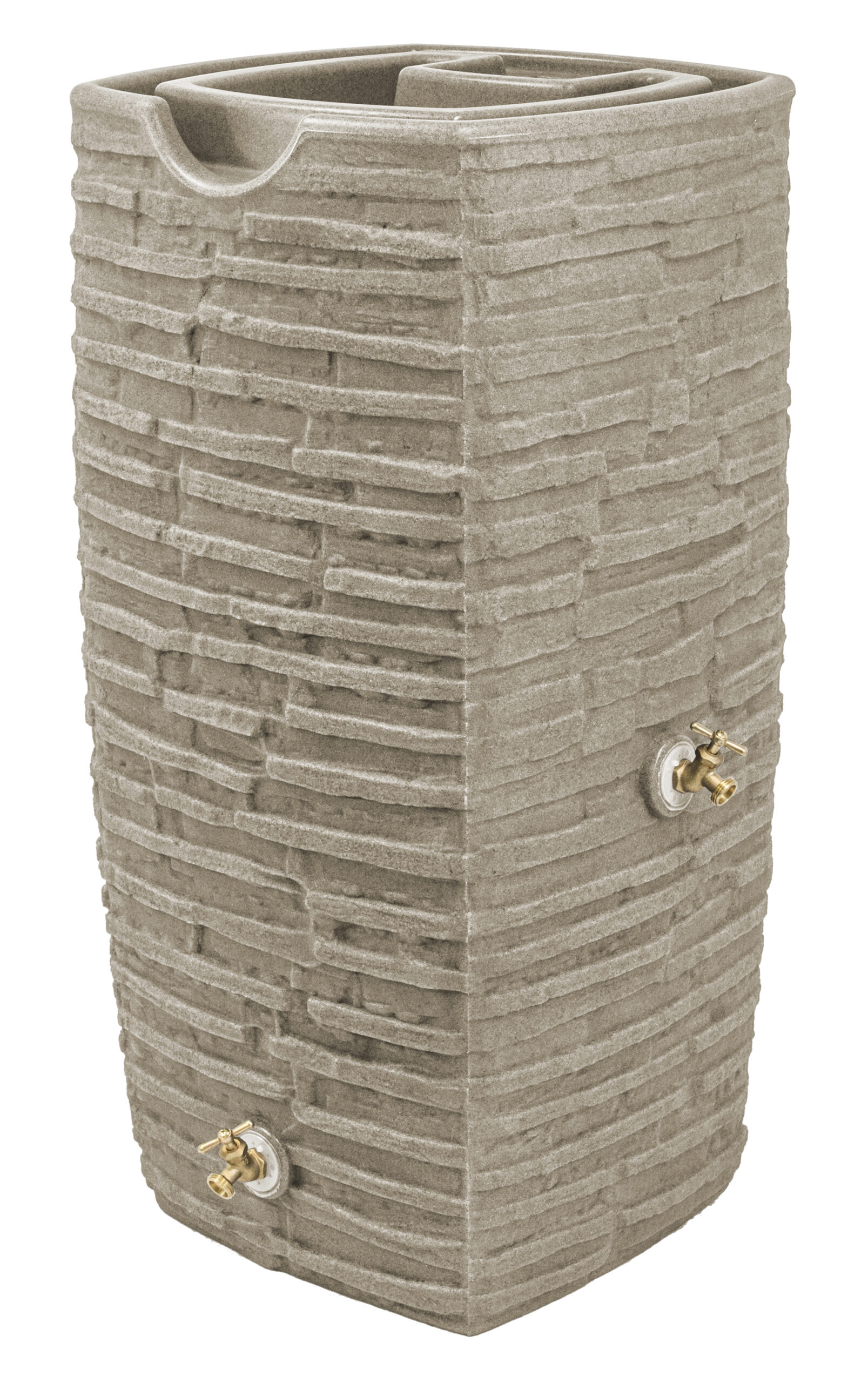
Styled like a planter rather than a utility barrel, built for front yards and anywhere the barrel needs to blend in.
Learn First
Every guide cites its sources, state statutes, the EPA, USGS, university extensions. If we can’t source a claim, we don’t publish it.

Why Trust Us
The internet is full of contradictory answers about rainwater. We exist so you never have to sort through them again.
Every state entry links to the law or agency it came from. When a law changes, the page changes.
Products are judged on material quality, real capacity, ease of install, and manufacturer track record.
No manufacturer can pay for placement, a rating, or a “best pick” label. Ever.
We run these systems at home, from first barrel to staged filtration, before we write about them.
Ready When You Are
A single 50-gallon barrel with a diverter is enough to cut your summer water bill and keep a garden alive through a restriction.
Shop Rain Barrels